Epoxy Flooring in West Des Moines Built on a Tested Slab

Every floor starts with a diamond grind and a written moisture test, so the coating has something real to hold onto.

West Des Moines Epoxy Flooring has spent more than 20 years putting down epoxy garage floors, polished concrete, polyaspartic and flake coatings, basement floors, metallic epoxy and commercial, industrial and kitchen flooring for homes and businesses in West Des Moines, IA. Every job starts at the concrete, because the slab decides how long any coating will last.

We open each floor with a diamond grinder or a shot blaster, test it for moisture in writing, and map the cracks and old coatings before a final price is set. The proposal names the product line, the number of coats and the finished thickness, so the floor you get can be checked against the quote you signed.

That approach applies to a two-car garage in a newer subdivision, a walkout basement, an office corridor or a restaurant kitchen. The system changes from room to room; the order of the work does not.

Get Your Free Quote

Fast response • No obligation

So we can reach you about your request.

So we can send you a confirmation after you submit this inquiry form.

  • 20+ Years in Epoxy Flooring
  • Moisture Tested Before Pricing
  • Coats and Thickness in Writing

What we do

Our Services

Ground, tested and coated epoxy floors for West Des Moines garages, basements and businesses

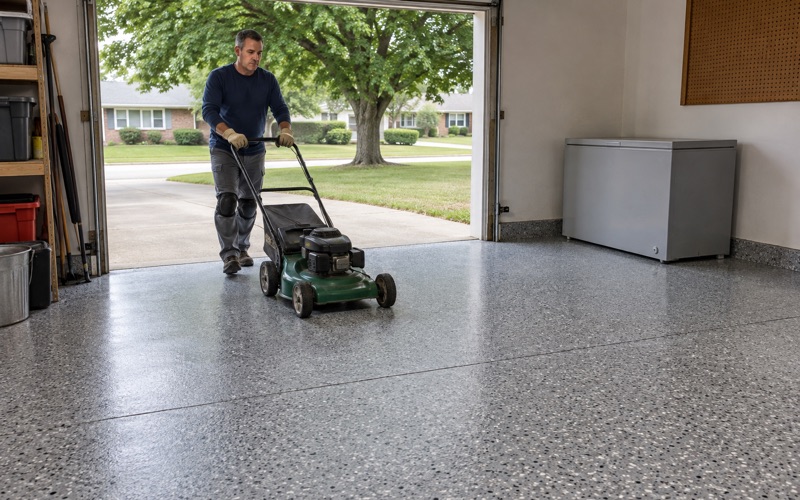
A push mower rolled back onto a finished gray flake epoxy garage floor at a 1970s ranch house in West Des Moines.

Epoxy Garage Floor

Ground, tested and built-up epoxy garage floors that hold up to road salt, hot tires and an Iowa winter.

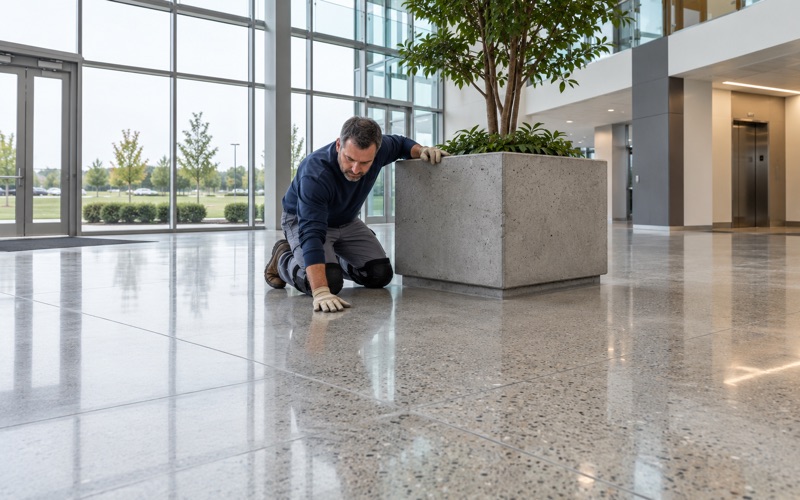
A polished concrete floor with salt-and-pepper aggregate in the atrium of a West Des Moines corporate office building.

Polished Concrete Floors

Diamond-ground, densified and polished concrete floors for showrooms, offices, warehouses and finished lower levels.

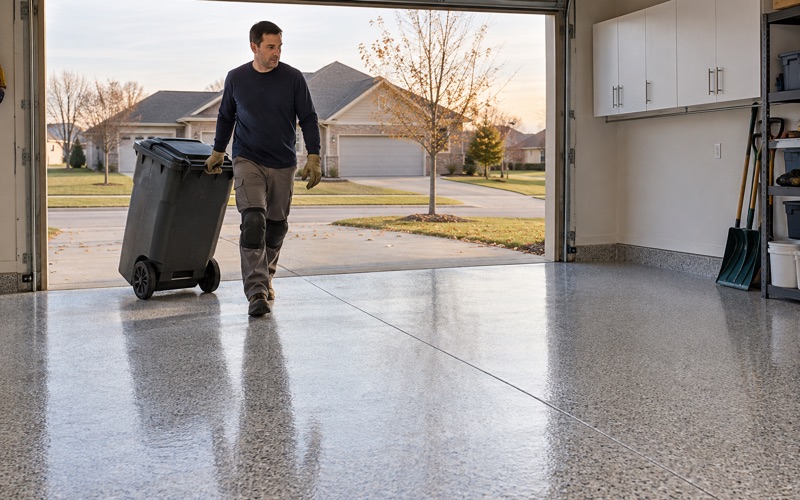
A trash cart rolled back into a West Des Moines garage the same day its polyaspartic flake floor went down.

Polyaspartic Floor Coating

Fast-curing, color-stable polyaspartic coatings for garages, walkouts and commercial floors that cannot be closed for long.

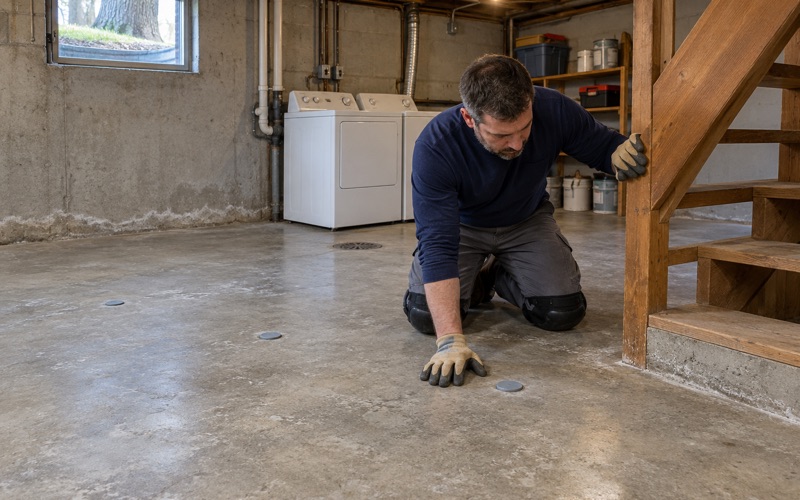
Moisture probes set into a bare basement slab in an older West Des Moines ranch house, read before any coating is chosen.

Basement Floor Epoxy

Basement and walkout floor coatings that start with the water question: sump, drain tile and a written moisture test.

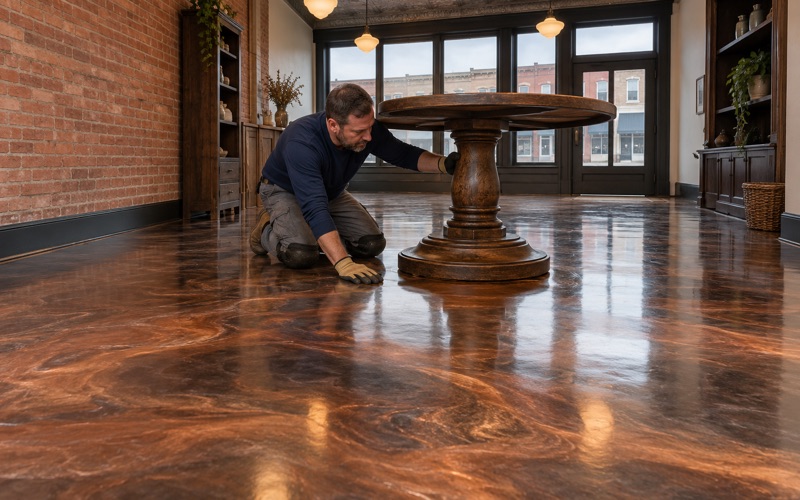
A copper, bronze and charcoal metallic epoxy floor in an old brick storefront boutique in Valley Junction, West Des Moines.

Metallic Epoxy Floor

Marbled, three-dimensional metallic epoxy floors poured over a flat, tested slab for lower levels, showrooms and offices.

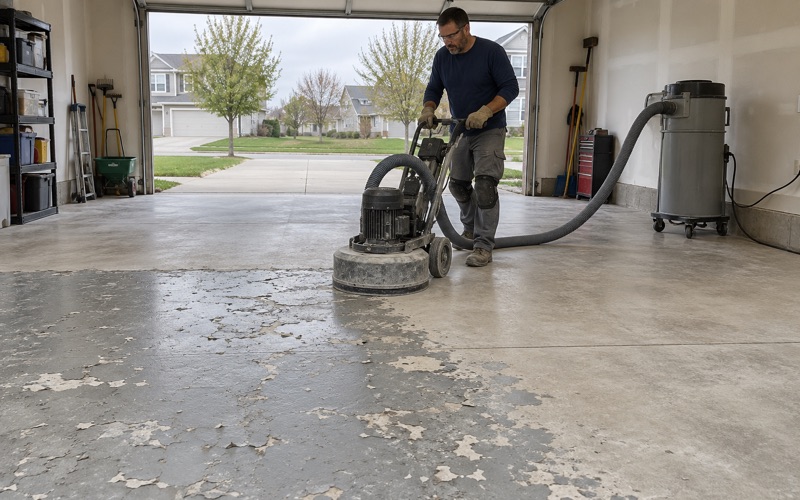
A diamond grinder taking a peeling store-bought garage coating down to bare concrete in a West Des Moines garage.

Concrete Grinding

Diamond grinding and shot blasting that strips old coatings and opens concrete to a measured profile before any new floor.

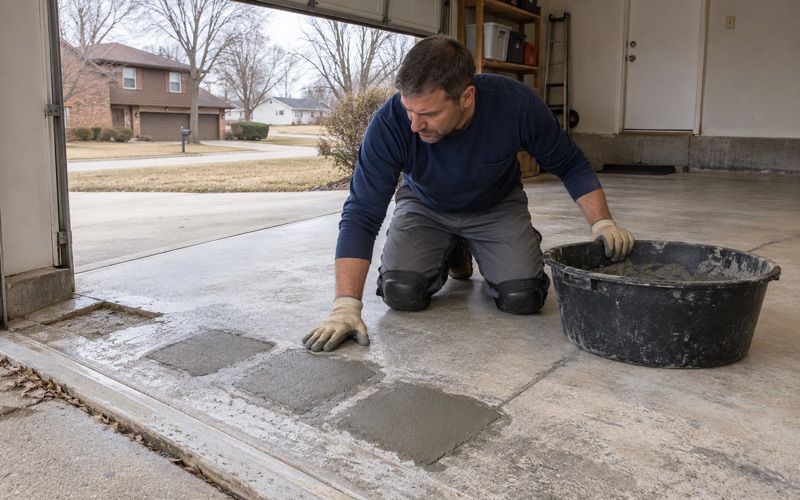
Salt-scaled spalls at the front edge of a West Des Moines garage slab cut back and patched level before the floor is coated.

Concrete Floor Repair

Crack, joint, spall and scaling repair for garage, basement and commercial slabs, done before a new floor finish goes down.

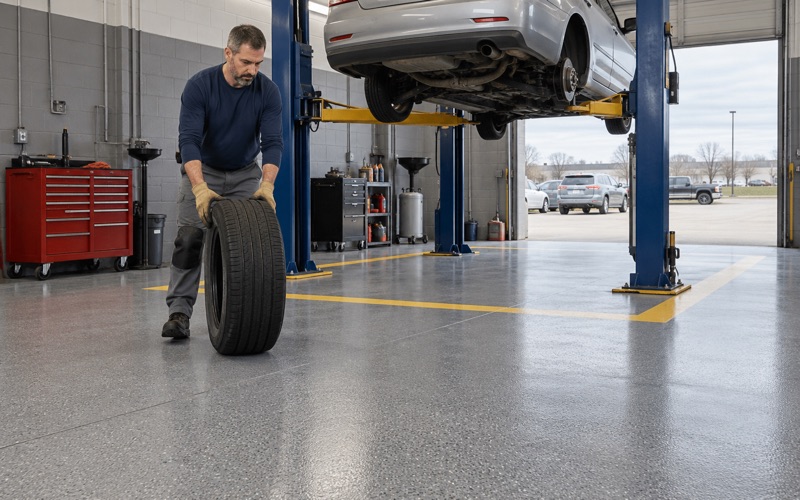
A quartz-broadcast epoxy floor under a two-post lift in an independent auto service shop in West Des Moines.

Commercial Epoxy Flooring

Seamless epoxy floors for offices, stores, clinics and service shops, installed in phases so the business keeps running.

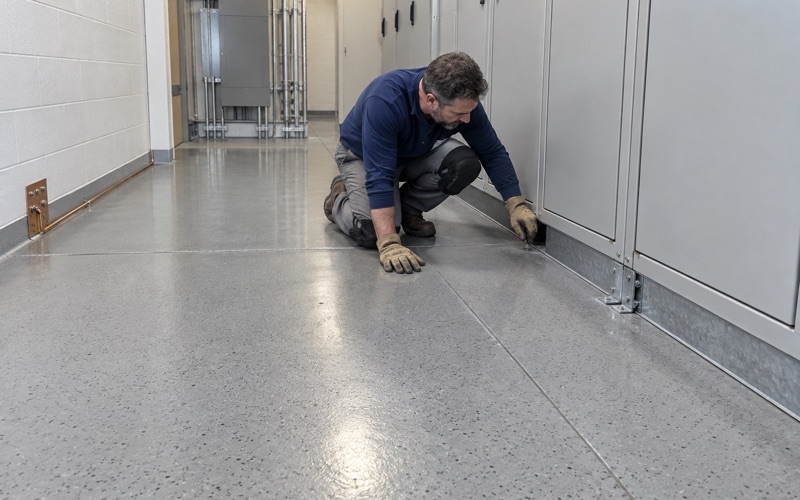
A static-dissipative floor in the electrical room of a West Des Moines data-center building, its grounding strip running to the wall.

ESD Flooring

Static-dissipative and conductive epoxy floors for electronics, server and electrical rooms, tested to the owner's specification.

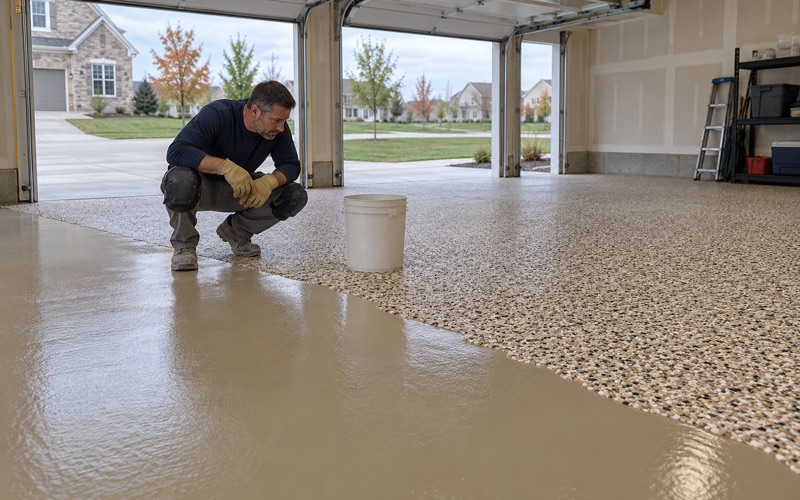
A dense cream, tan and brown flake broadcast settled across half of a West Des Moines garage floor, the base coat still showing beyond it.

Flake Epoxy Floor

Full-broadcast vinyl flake floors in the blend and chip size you choose, sealed under a clear topcoat with the texture you want.

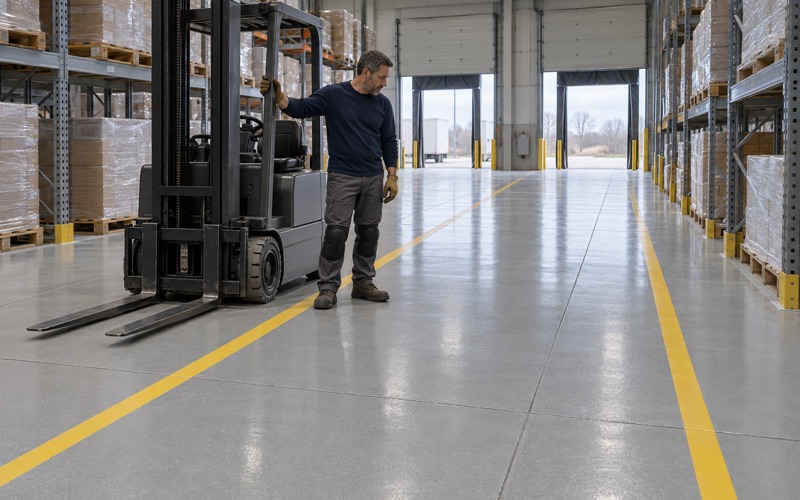
A high-build epoxy floor in a West Des Moines tilt-up warehouse, a parked forklift beside its marked traffic lane.

Industrial Epoxy Flooring

Heavy-duty epoxy, mortar and urethane cement floors for plants, warehouses and shops that take forklifts, impact and chemicals.

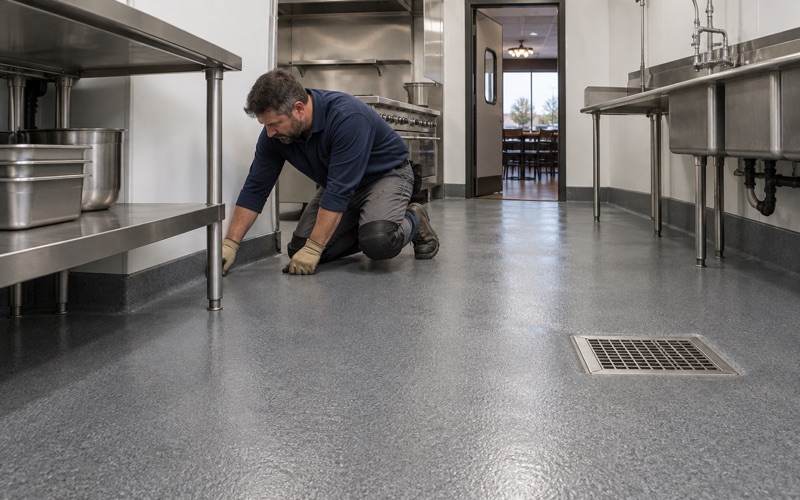
A textured urethane cement kitchen floor with an integral coved base in a West Des Moines restaurant, drying after the close.

Commercial Kitchen Flooring

Seamless kitchen floors with integral cove bases, slip-resistant texture and urethane cement for hot water, grease and daily washdowns.

Two Decades on Central Iowa Concrete

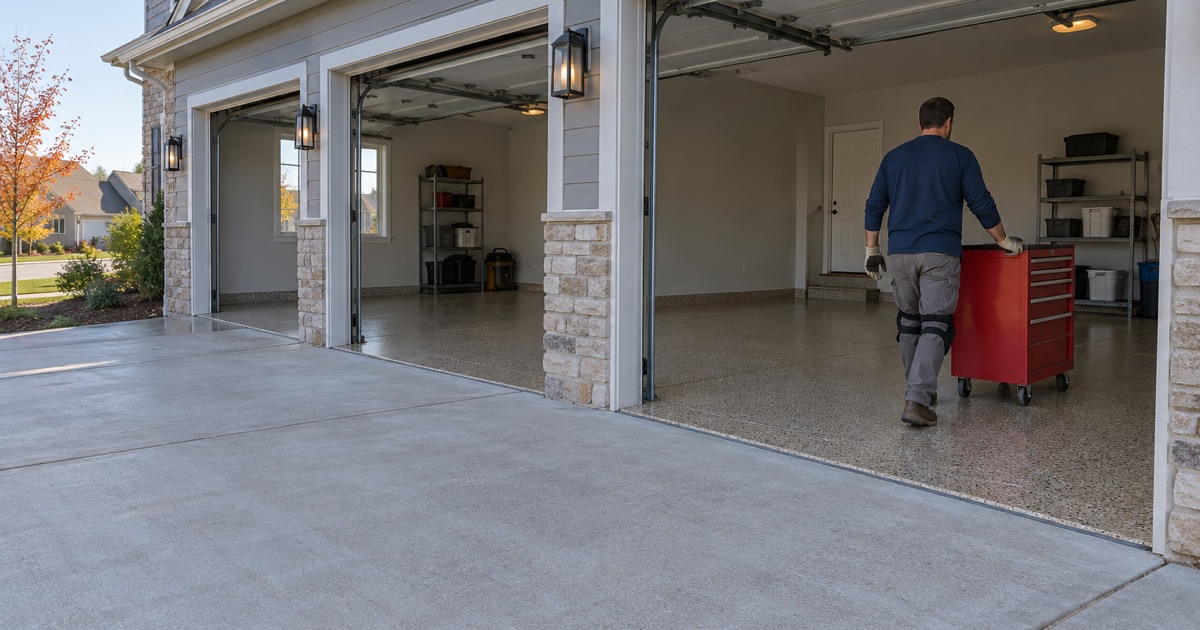
A rolling tool chest wheeled back into the third bay of a finished flake garage floor at a newer West Des Moines house.

More than 20 years in epoxy flooring

We have worked on concrete floors for over 20 years, long enough to see what happens to a coating that went down on a damp slab or an acid-etched surface. That record is why preparation and testing take up so much of our scope and why we turn down floors that should not be coated yet.

Why Choose West Des Moines Epoxy Flooring

Ground, Never Etched

Every slab is opened with a diamond grinder or shot blaster to a measured surface profile, so the epoxy flooring locks into sound concrete rather than sitting on the weak, chalky skin that an acid etch and a garden hose leave behind.

Moisture Tested on Paper

No price is final until the slab has been moisture tested and the result is written into the scope, because West Des Moines spans Raccoon River alluvium and poorly drained Des Moines Lobe swales, so a coating does not lift off a slab that someone simply assumed was dry.

Salt-Season Garage Systems

Garage coatings are chosen to stand up to the brine and rock salt that ride in on tires from November through March, so the floor keeps its film through an Iowa winter rather than scaling and staining like bare concrete or a thin kit coat.

Cure by Dew Point

Never do we schedule cure by the calendar alone. Slab temperature and the dew point spread at the surface set the day, so a cold, unheated garage is told to wait for warmer weather rather than being coated and left with amine blush and weak adhesion.

Food Code Kitchens

Kitchen floors are planned around the 2017 FDA Food Code that the state inspects against in all four of the city’s counties, so coved bases and wet-area texture are built in from the start rather than discovered at the next inspection.

The Garage Floor, Start to Finish

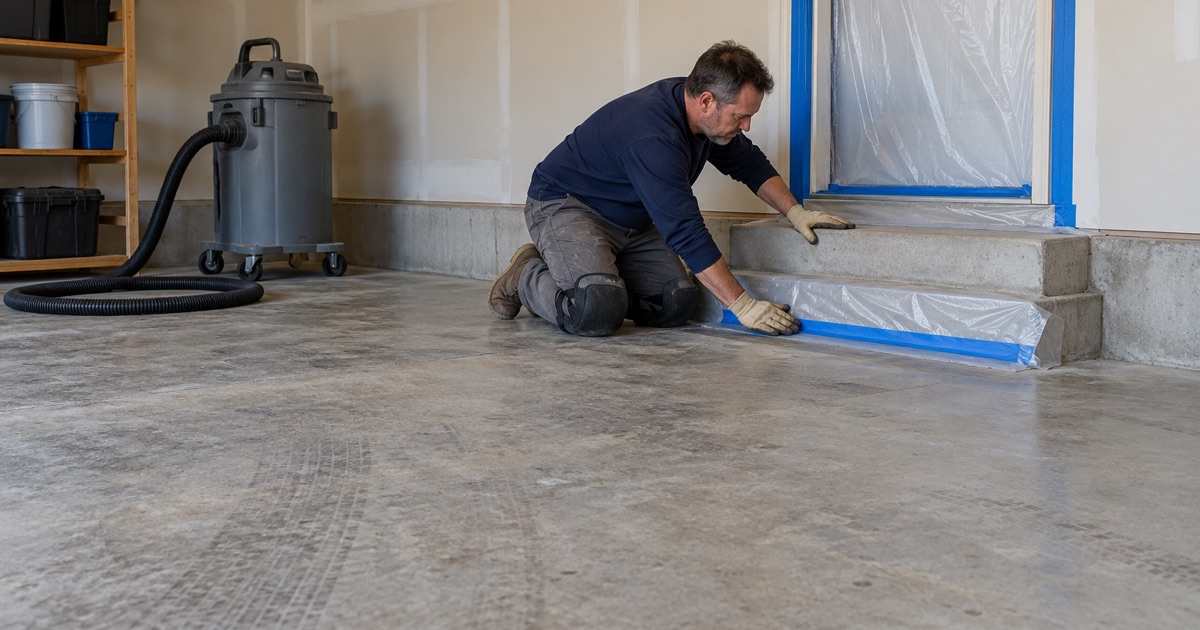
The house door sealed off with plastic sheeting before a garage slab is ground in West Des Moines, so dust and odor stay out of the home.

How an epoxy garage floor job runs

We start by walking the slab, mapping cracks and old coatings and setting moisture tests. Once the results are back and the price is written, the crew grinds, repairs, applies the base coat and broadcast, and finishes with the topcoat. You park on it after the cure window the product line calls for.

Attached garages and keeping dust out of the house

Most garages here share a wall and a door with the living space. Grinding dust is captured at the machine with a vacuum, and we seal the house door during prep. Low-odor products are available for attached garages as a comfort and re-entry choice, not as a legal requirement in Iowa.

Newer houses and garage slab moisture

A newer house does not mean a drier garage. The IRC R506.2.3 exception lets a garage slab go in without the under-slab vapor retarder a living-space slab needs, so moisture can still rise through it. We test every garage slab, whatever year the house was built.

Testing the garage slab before coating

We use ASTM F2170 in-situ relative humidity probes or ASTM F1869 calcium chloride tests, depending on the slab and the schedule, with an ASTM D4263 plastic sheet test as a quick screen. The readings are compared with the product’s limits and written into the proposal.

Cracks, spalls, pitting and replacement

Hairline cracks and shallow pitting are filled and ground flush before coating. Spalled joints and wide or moving cracks get a repair plan of their own. When a slab is heaved, broken through or badly scaled, we say plainly that it should be replaced rather than coated.

Brine and rock salt over an Iowa winter

Calcium chloride and rock salt deicers ride in on tires and sit in puddles for months. On bare concrete they feed freeze-thaw scaling and leave white rings. A coated garage floor keeps that brine on top, where it can be squeegeed out and rinsed in spring.

Cold-weather coating and waiting for spring

Resin needs a warm slab and a safe margin above the dew point to cure properly. An unheated garage in January rarely gives either. If the slab is too cold, we book the job for spring rather than coat a floor that will not cure the way the product line intends.

Hot tire pickup and peeling under a warm tire

A tire coming off a warm drive softens a weak or thin coating, and as it cools it grips the film and pulls it up. Hot tire pickup is most common with water-based kits on unground concrete. A ground slab and a full-thickness system resist it.

Store-bought kits versus a built-up floor

A kit from the hardware store is usually a thin, water-based epoxy rolled onto etched concrete. It can look good for a season. A professional floor is ground, primed and built to a stated thickness with a 100% solids base and a durable topcoat, which is what lets it outlast a few winters.

What an epoxy garage floor costs

Size matters less than condition. Crack and joint repair, removing an old coating, adding a moisture-mitigation primer, and choosing a full flake or quartz broadcast all move the price. We quote after testing so the number reflects the slab you actually have.

Basements, Walkouts and Damp Slabs

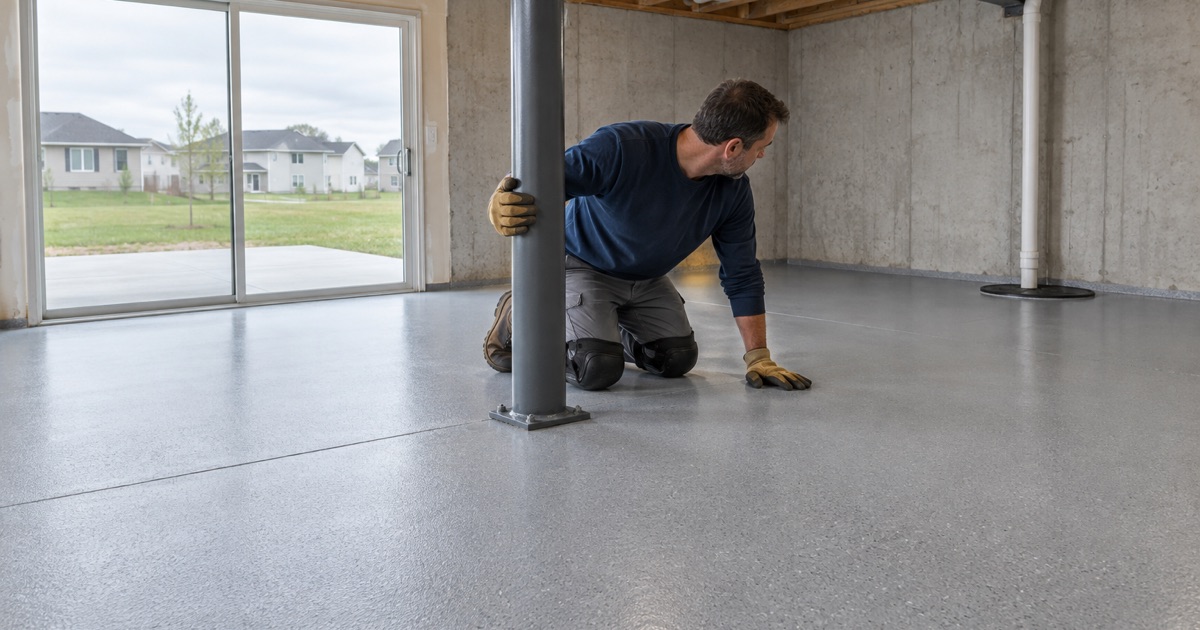
A newly coated walkout lower level in West Des Moines, left unfinished so the floor could be done before any walls go up.

Basement floor coating and the moisture question

A basement slab sits against the soil, so moisture is the first question rather than color. We test before quoting, look at the walls and floor for past water, and only then choose between a standard primer, a mitigation primer or advice to leave the floor uncoated for now.

Walkout lower levels and sunlight on the floor

Walkout basements bring sliding doors and direct afternoon sun onto the floor. Epoxy alone can amber under ultraviolet light, so we usually finish these floors with a polyaspartic or another UV-stable topcoat and plan the color with that light in mind.

Sump pits, drain tile and floor drains

The sump pit and drain tile tell us how the house handles water, so we check them before coating. The coated floor is detailed around the sump lid and floor drain so water still runs to them, and we leave access to the pit for service.

Coating an unfinished basement before the walls

In a new house the best time to coat a basement is before framing goes up, while the whole slab is open and the edges are easy to grind. We still test the slab first, because a young basement floor can hold placement water for a long time.

Paint, patching and tile glue on old basement floors

Older basements often carry layers of paint, leveling patches and black mastic from removed tile. Each layer is ground off or tested for adhesion, since a new coating is only as strong as whatever is beneath it. Mastic removal is planned separately because it changes the time and the price.

Efflorescence and white powder on the floor

White powder on a basement floor is efflorescence, salts carried up by moisture and left behind as it evaporates. It is a sign that water is moving through the slab. We test and remove it, and it usually means the floor needs a mitigation primer or a fix before coating.

When a basement slab needs a mitigation primer

When test readings sit above what a standard primer can handle, a moisture-mitigation primer goes down first. It is designed to hold back vapor drive so the coating above it can bond. We write the readings and the primer into the proposal so you can see why it was needed.

Coating after water gets in

If a basement has flooded, the cleanup and drying come before any coating talk. West Des Moines still remembers the 1993 Raccoon River flood, and basements from that era may carry that history. We wait for the slab to dry, retest it, and only then plan the floor.

What a coating warranty leaves out

Most coating warranties exclude failures caused by moisture vapor transmission and hydrostatic pressure. We explain that exclusion before the job is sold, along with anything else the specific product warranty leaves out, so nobody learns about it after a floor lifts.

A floor coating is not radon or waterproofing work

A coated basement floor is not radon mitigation and it is not waterproofing. In Iowa, radon testing and mitigation take a state credential under Iowa Code chapter 136B, which we do not hold. A coating can cover a slab; it does not seal out soil gas or stop seepage.

Color, Flake and Finish

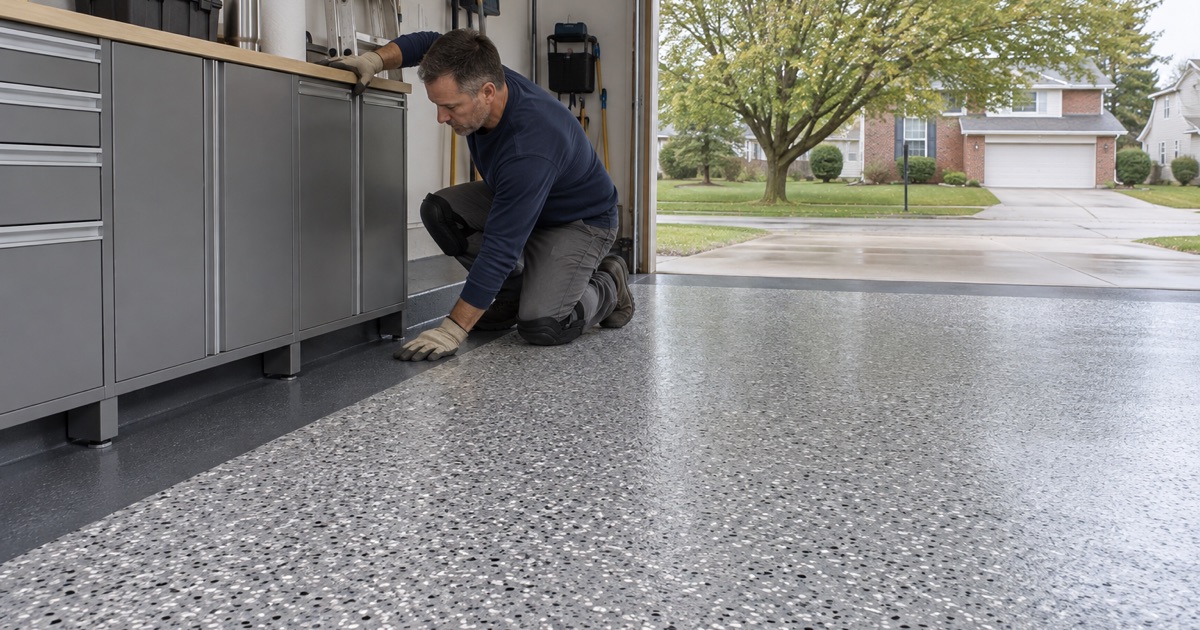
A light gray flake garage floor framed by a solid charcoal border band along the walls of a West Des Moines garage.

Vinyl flake blends and chip size

A vinyl flake broadcast hides dust, small imperfections and tire marks, and the blend sets the overall color. Smaller chips give a fine, granite-like look, while larger chips read bolder. Full broadcast to refusal adds texture and helps the floor wear evenly.

Metallic epoxy floors

Metallic epoxy uses pigments that move as the resin levels, leaving a marbled, three-dimensional finish. It needs a flat, well-ground slab and a careful application, because every roller mark and seam shows. We plan the color and the movement before the pour so the result is intentional.

Polished concrete and aggregate exposure

Polished concrete is the slab itself, ground and densified with a lithium silicate densifier before polishing. The depth of the grind decides how much aggregate shows, from a cream finish to full stone exposure. We show samples so you know what your slab can realistically give.

Gloss, satin or matte sheen

High gloss looks crisp but shows dust and scratches. Satin and matte topcoats hide tire marks and everyday dust better and are easier to live with in a working garage. The sheen is set by the topcoat, so we choose it alongside the wear system.

Quartz broadcast for color and grip

A quartz aggregate broadcast adds color and a durable, sandpaper-like texture in one step. It is a common choice for wet areas, ramps and commercial spaces where slip resistance matters, and the final texture is set by how the topcoat is applied over it.

Solid color coatings

A plain solid color is still the right call for many shops, utility rooms and commercial back-of-house areas. It is easy to clean, simple to touch up, and works well with painted safety lines. We still grind and test first, since a solid color shows every defect underneath.

Sunlight, ultraviolet light and ambering

Epoxy can yellow, or amber, in direct sun. Floors near open garage doors, walkouts and storefront windows usually get a UV-stable polyaspartic or polyurea topcoat to hold their color. We point out where sunlight will reach the floor before choosing the system.

Saw-cut lines, borders and logos

Saw-cut lines can create tile patterns or borders, and a logo can be set into the floor with masking and contrasting colors. Each cut is detailed and sealed so it does not trap dirt. Planning these at the start keeps the layout clean around joints and drains.

Offices, Stores, Kitchens and Warehouses

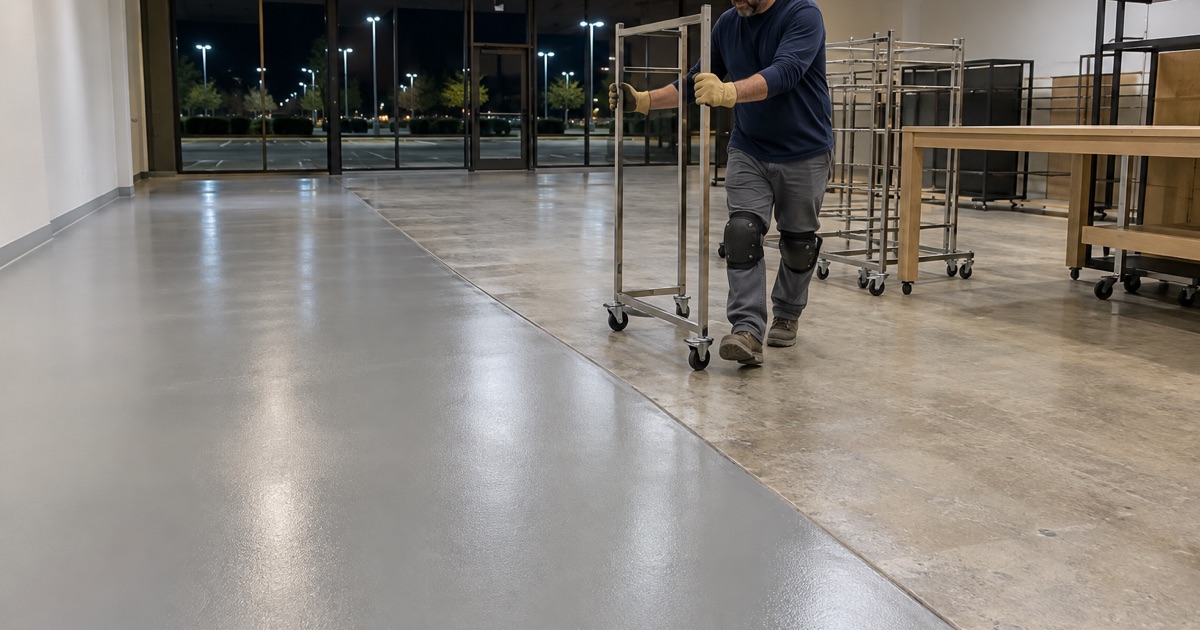
One section of a West Des Moines store floor recoated overnight, the display fixtures rolled aside before the morning opening.

How a commercial floor job differs

Commercial work brings schedules, occupied spaces and often a facility manager signing off on each phase. We break the floor into zones, plan around operations, and document the system, coats and thickness for the building’s maintenance records.

Office lobbies, corridors and break rooms

Office floors need to look finished as well as wear well. Polished concrete or a seamless coating in a lobby or break room can be paired with a neutral color and a matte topcoat. Work in occupied buildings is done after hours with dust captured at the machine.

Retail and showroom floors

Retail floors take carts, foot traffic and displays that move. We stage the work in sections so a store can stay open, with cure times built into the plan. A showroom can use metallic or polished finishes that show off the space without slipping when a customer walks in from the rain.

Restaurant kitchens and coved bases

Kitchen floors here are inspected by the state against the 2017 FDA Food Code, which calls for coved floor and wall junctures under 6-201.13. We build an integral cove base and choose a texture for wet areas, and we plan around grease interceptors and floor drains.

Urethane cement for hot water and cleaners

Where hot washdowns, steam and aggressive cleaners would soften an ordinary epoxy, urethane cement is the better choice. It tolerates thermal shock and heavy cleaning, which is why it is common in kitchens, food production and wash bays.

Warehouse and distribution floors

Warehouse floors take forklifts, pallet jacks and steady turning traffic. We choose a system built for that load, often a thicker epoxy or a densified and polished slab, and we repair joints first so wheels do not break down the edges.

Data center and electrical rooms

Data halls and electrical rooms may call for static-dissipative or ESD flooring, which controls static within a stated resistance range. The range comes from the owner’s specification, and we confirm the grounding layout and testing before work begins.

Auto repair and fleet garages

Shop and fleet floors face oil, brake fluid, hot tires and dropped tools. We use systems rated for chemical exposure and impact, add texture where fluids collect, and plan the work around bays so the shop can keep vehicles moving.

Federal VOC limits and low-odor choices

Floor coatings sold in the United States are covered by the 40 CFR 59 Subpart D national architectural coatings rule, which sets VOC content limits. Iowa adds no state limit of its own, but low-odor products are still worth asking for in occupied spaces, and we offer them as a comfort choice.

Nights and weekends around an open business

Many businesses cannot close for a floor. We schedule grinding and coating overnight or on weekends and phase the work so each area is ready to use again on time, with the cure window set by the product and the slab conditions.

Areas We Serve

West Des Moines Epoxy Flooring provides epoxy-flooring throughout the greater West Des Moines area, with the same crews and the same standards on every job.

Good to know

Frequently Asked Questions

How much does an epoxy garage floor cost in West Des Moines?

The price follows the slab more than the square footage. A sound two-car slab that only needs grinding and a standard flake system sits at the low end, while crack repair, removing an old coating or adding a moisture-mitigation primer moves the number up. We give a written price after the slab is mapped and moisture tested, not before.

How long does a coated floor take before we can use it?

Most garage floors are ground and coated over one to two days, depending on the system and the repairs involved. Foot traffic usually comes back within a day, and vehicles wait longer, with the exact window set by the product line and the slab temperature at the time of the job rather than a fixed promise.

Is your company registered to work in Iowa?

Iowa requires contractor registration under Iowa Code chapter 91C, and that is a registration, not a trade license. West Des Moines has no separate city license for flooring or coating work that our research found. We do not hold any manufacturer or trade certification and do not claim one; ask any contractor you are comparing what they actually hold.

What is the difference between epoxy and polyaspartic?

A 100% solids epoxy builds thickness and bonds hard to a ground slab, but it cures slowly and can amber in sunlight. Polyaspartic cures much faster and holds its color better under ultraviolet light, which is why it is often used as the topcoat over an epoxy or flake base. Many of our garage systems use both.

Can you coat a basement floor that has had water on it?

Sometimes, but only after the water question is answered. We check the sump pit, the drain tile outlet and the slab for efflorescence, then test moisture. A coating does not stop seepage or hydrostatic pressure, so a slab that is still taking on water needs that fixed first.

Why do you grind the concrete instead of acid etching it?

Acid etching leaves an uneven, often weak surface and puts acid and rinse water on the floor. Diamond grinding or shot blasting opens the slab to a measurable ICRI concrete surface profile and removes laitance and old sealers, which gives the coating a real texture to bond to.

Will the floor be slippery when it is wet?

Any smooth coating can be slick under water, slush or oil. We set the texture by the broadcast and the topcoat, using flake, quartz aggregate or a grit additive, and we talk through the trade-off between grip and how easily the floor cleans before the job starts.

Does the warranty cover peeling caused by moisture?

Most coating warranties exclude failures caused by moisture vapor transmission and hydrostatic pressure, and we say so before you sign. That exclusion is the main reason we test the slab first and write the results and any mitigation primer into the scope.

Can you work on a business floor without closing the business?

Usually. Office, retail and warehouse floors are split into phases around business hours, with overnight and weekend windows for areas that cannot close. Restaurant kitchens are scheduled around service and cleaning, with the cure time built into the plan.

Do you install floors in winter?

Heated spaces, yes. An unheated garage in a central Iowa winter is a different matter, because resin cures by slab temperature and dew point rather than the date. When the slab is too cold, we say so and book the floor for a warmer stretch rather than coating it anyway.

Ready to Get Started?

Request a free quote today and we'll get back to you fast.