
West Des Moines Epoxy Flooring installs flake epoxy floors in West Des Moines, IA, serving surrounding cities including Clive, Windsor Heights, Waukee, Urbandale and Norwalk. A flake floor is the system we put down more than any other, and after more than 20 years on concrete we know that the chip blend you choose is the easy part of the job. The hard part is the slab and the layers that sit between it and the flakes.
A flake floor starts with a pigmented base coat, followed by a broadcast of colored vinyl chips while the base is still wet, and is sealed under a clear topcoat. The result is a speckled, textured surface that hides dust, dirt and small imperfections and holds up well to daily use in garages, basements, laundry rooms and many commercial spaces.
Before any color is chosen, we grind the slab with diamond tooling or a shot blaster, test it for moisture and map cracks and old coatings. The proposal names the product line, the base coat, the flake blend and size, the topcoat, the number of coats and the finished thickness, so you can see exactly what you are paying for and check the finished floor against it.
Choosing the Flake
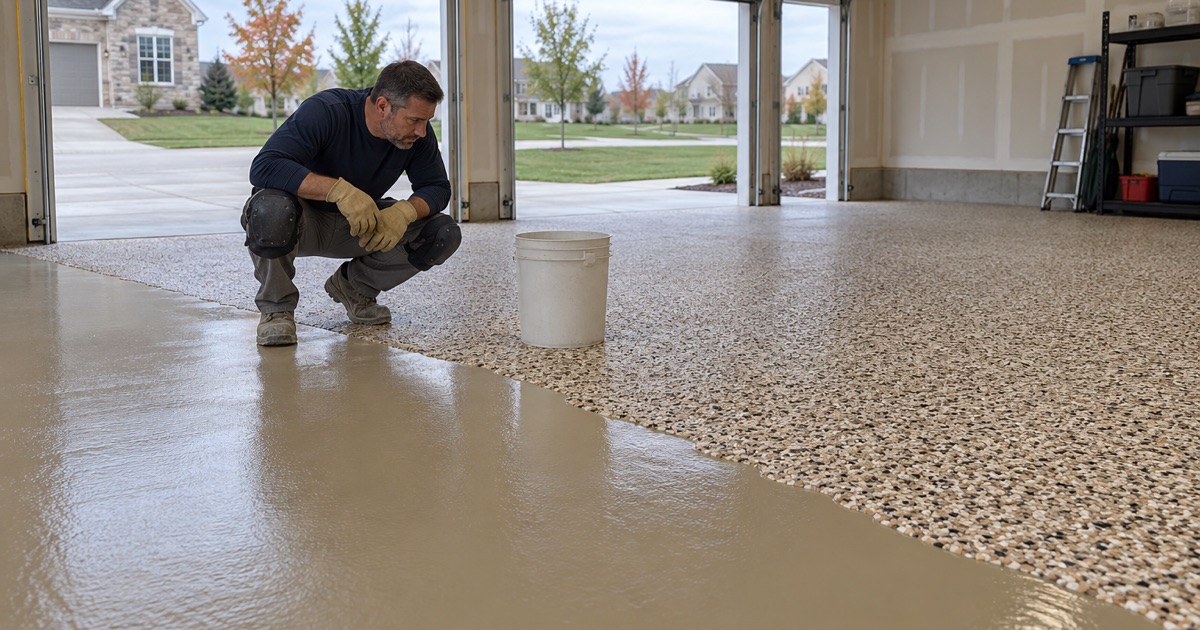
Blends and colors
Flake comes in many standard blends, usually a mix of three to five colors that read as one tone from across the room. Gray, tan and black blends are popular because they hide dirt and suit most garages and basements. Brighter or higher-contrast blends make a stronger statement in shops, showrooms and recreation rooms.
The base coat color matters too, even under a full broadcast. A base that matches the dominant flake color hides any small gaps and makes touch-ups less visible. We help you choose both together so the floor looks consistent in the light of your own space, which can look very different from a sample board in a showroom.
Chip size
Flake is sold in several sizes. Small chips give a fine, granite-like look, while large chips create a bolder pattern with more visible pieces. Medium chips sit in between and are a common choice for garages.
Chip size changes more than looks. Larger chips hide more dust and imperfections and give a slightly different texture underfoot. Smaller chips make a more uniform surface that is easier to clean. We bring samples so you can see the difference on your own floor.
Full broadcast or partial broadcast
A full broadcast covers the base coat to refusal, meaning flake is thrown until the wet base cannot hold any more. A partial broadcast scatters flake over a visible base color for a lighter, more open look.
We use full broadcast as our default for garages and high-traffic floors because it adds texture, hides more and wears more evenly. Partial broadcast can suit basements and rooms where a softer look matters more than maximum durability.
Building the Layers
Grinding and repairs
The base coat needs a ground slab to bond to. We open the concrete to the surface profile the product line specifies, remove old coatings and sealers, and fill cracks and spalls. Dust is captured at the machine with a vacuum instead of being swept or rinsed out of the door.
Repairs are ground flush so the base coat lays down evenly. If a crack is still moving or the slab has heaved, we tell you that a flake floor will not hide it for long and discuss repair or replacement first.
Base coat and broadcast
The base coat is often a 100% solids epoxy, rolled or squeegeed to the thickness in the proposal. While it is still wet, flake is broadcast by hand across the whole floor in an even pattern.
Timing matters. Flake thrown too late will not embed, and flake thrown unevenly creates light and heavy patches. We work the floor in sections so every area receives flake at the right time.
Scraping and topcoat
Once the base has cured, loose flake is swept up and the surface is scraped to knock down high points and sharp edges. This step gives the topcoat an even surface to wrap around each chip.
The clear topcoat seals the flake and takes the daily wear. We often use a polyaspartic or polyurea topcoat for its abrasion resistance and color stability in sunlight. The number of topcoats and any added grit are written into the proposal.
Texture and Slip Resistance
How texture is set
The texture of a flake floor comes from the flake itself and the thickness of the topcoat over it. A thinner topcoat leaves more texture, while a thicker one smooths the surface. Adding a fine grit to the topcoat increases grip further.
We specify slip resistance by those materials rather than promising it in general terms. Garage entries, laundry rooms and areas near outside doors are good places to add extra texture.
Balancing grip and cleaning
More texture grips better underfoot but also holds more dirt and takes more effort to clean. A very rough floor can be harder to mop and may wear brooms and mop heads faster.
We talk through that trade-off before installation. Many floors use one texture in the main area and a little more grip at entries, where water and snowmelt come in.
Where Flake Floors Work Best
Garages
Flake floors are the standard choice for garages because they hide tire marks and dust and hold up to the brine and rock salt that ride in from November through March. The texture also helps when the floor is wet.
We pair flake garage systems with topcoats that resist hot tire pickup and stand up to the chemicals and salt found in a working garage. The topcoat thickness and any added grit are listed in the proposal with the rest of the system.
Basements, laundry rooms and mudrooms
In basements, laundry rooms and mudrooms, flake floors provide a durable, easy-to-clean surface that looks finished without feeling clinical. A satin topcoat is often a better choice than high gloss here.
Below-grade slabs are tested for moisture, and the room is read for past water before any system is chosen. Low-odor products are available for these spaces as a comfort choice.
- 20+ Years in Epoxy Flooring
- Moisture Tested Before Pricing
- Coats and Thickness in Writing